
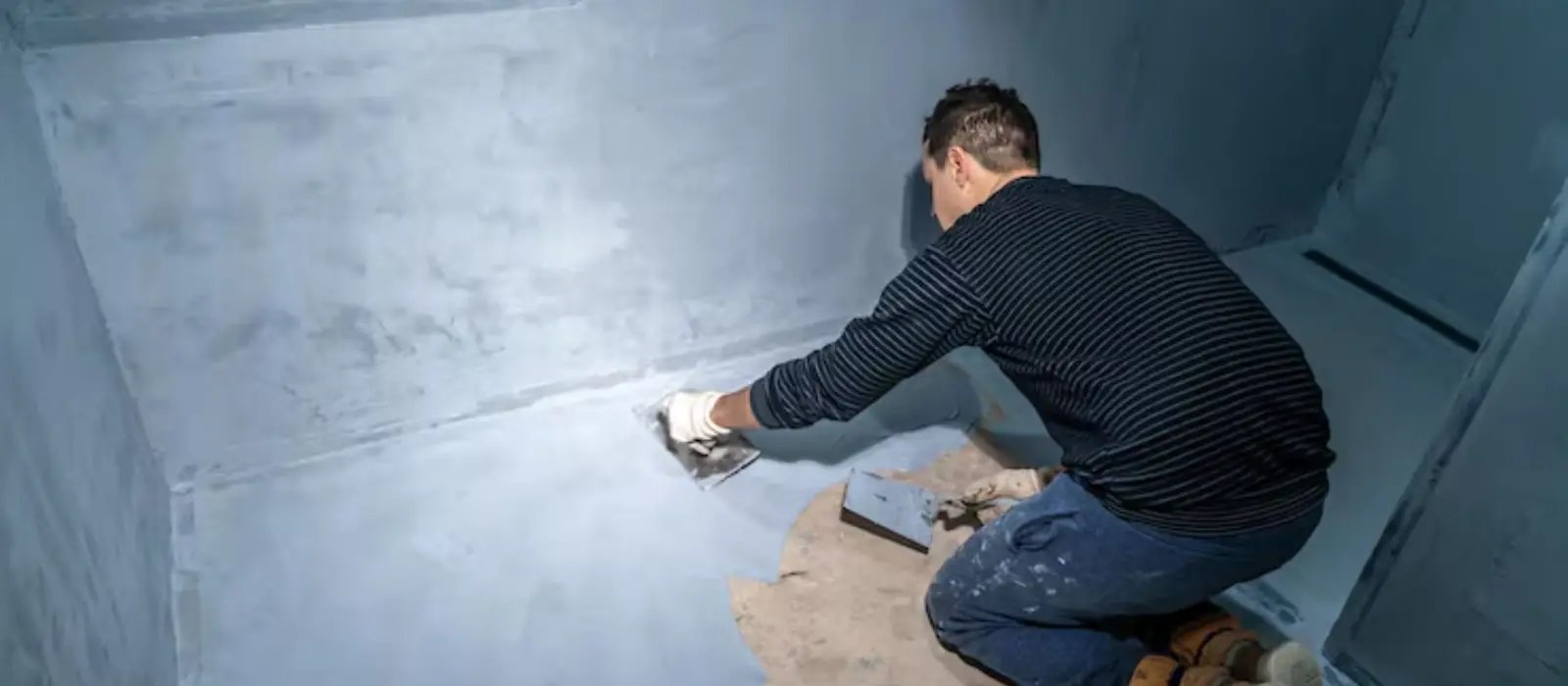
Waterproof basement paint is a thick masonry coating, often cement or latex based, that fills pores in concrete or block walls and forms a barrier against moisture. It works on walls that are damp from vapor or minor seepage.
It does not work when water is pushing in under pressure from wet soil outside. Painting over that kind of leak traps water behind the coating, which then blisters and peels. This page shows how to tell the two cases apart before you spend a weekend rolling on paint.
Damp walls versus active leaks
The test below decides most paint-or-not questions.
Paint can help
Moisture is coming through as vapor or a faint dampness.
- Walls feel cool and slightly damp, never wet
- Chalky white mineral deposits appear but no running water
- Problem is worse in humid summer weather
- No water on the floor after heavy rain
Paint will fail
Water is entering through cracks, joints or the floor edge.
- Water trickles or puddles after rain
- Dark stains climb the wall or form along the floor joint
- Existing paint is bubbling or flaking
- A sump pit runs often or overflows
A simple tape test you can do this weekend
Do it on a dry day, then repeat after rain.
- 01
Tape a plastic square to the wall
Use a 12 by 12 inch piece of plastic sheeting, sealed with duct tape on all four sides.
- 02
Wait a day or two
Leave it in place without disturbing it.
- 03
Read the result
Moisture on the wall side of the plastic means water is moving through the wall. Moisture on the room side means the air is humid and condensing.
- 04
Repeat after a heavy rain
A dry wall in dry weather can still leak when the soil outside is saturated.
If the plastic fogs on the wall side, groundwater is involved and paint is not enough.
Flood context for Voorhees basements
The draft Camden County hazard mitigation plan names Cedar Lake and Kirkwood as major water bodies in Voorhees, lists the Kirkwood Lake Dam as a critical facility in the 1 percent and 0.2 percent floodplains, and ranks flood hazard for the township as High.
It also records Hurricane Irene in 2011 and local flooding in 2013. That does not mean your basement will flood, but it explains why a wet-soil leak is a realistic concern. No public statistics tell us how many Voorhees basements are damp, so test your own walls.
Source type: Camden County hazard mitigation plan (draft)Matching the problem to the fix
| What you see | Likely cause | Better fix than paint |
|---|---|---|
| Damp patches, no running water | Vapor through porous concrete | Waterproof masonry coating, plus a dehumidifier |
| Water at the floor and wall joint | Hydrostatic pressure at the cove joint | Interior drain channel to a sump |
| Active crack leak | Foundation crack | Crack injection by a specialist |
| Water after every storm | Poor exterior grading or clogged gutters | Regrade, extend downspouts |
| Sump pit running or overflowing | High groundwater or failed pump | Service or replace the sump pump |
Fix the outside water first
The cheapest water control sits above the foundation. Clean gutters, run downspouts several feet from the wall, and make sure the soil slopes away from the house. These steps reduce the amount of water that ever reaches the wall.
After a storm, walk the perimeter and look for pooling. If water collects beside the foundation, no coating will keep up with it.
Check the sump pump too if you have one. Pour a bucket of water into the pit and watch the float lift and the pump discharge. A pump that does not start needs service before the next storm.
When not to paint at all
Do not paint over mold, efflorescence or loose old coating without cleaning it first. Do not seal a wet wall that is leaking, and never paint inside a sump pit or over a floor drain. If you see a gray or black patch that returns after cleaning, treat it as a moisture problem, not a cosmetic one.
Preparing a wall for waterproof paint
If your tape test says the wall is only damp, follow these steps.
- ✓Wire brush loose paint and white mineral powder
- ✓Patch holes and cracks with hydraulic cement
- ✓Wash the wall with a mild cleaner and let it dry fully
- ✓Wear a respirator and ventilate, since many coatings give off strong fumes
- ✓Apply two coats with a stiff masonry brush, letting each cure
- ✓Keep the dehumidifier running during the cure
Where plumbing fits in
A wet basement is not always groundwater. A leaking supply line, a dripping water heater or a cracked drain can soak a wall from inside. If you see wetness near a pipe, treat it as a plumbing issue and call for leak detection before sealing anything.
For groundwater, a drainage system with a sump pit is the standard answer, which is covered by our sump pump and basement waterproofing services. Paint has a place afterward, as a finish.
Nearby help
Homes in Gibbsboro and West Berlin share the same flat Camden County terrain and the same questions. If water is coming into your basement now, call (855) 575-2890 and a licensed plumber will advise on safe next steps.
Sources and references
The points above draw on these public standards, codes and guidelines. Rules change, so confirm current requirements with the agency or utility named before you rely on them.
- Camden County Hazard Mitigation Plan: municipal annexes (2021 public-review drafts)