
Start by finding where the water comes from
Painting a wall or running a dehumidifier hides a symptom. Water that comes from outside needs a path out, and water from a pipe needs the pipe fixed.
A simple look at timing helps. Water that shows up only after rain points to groundwater or runoff. Water that appears on a dry day points to a supply line, a drain or a water heater.
Source of water, signs and the usual remedy
| What you notice | Probable source | Typical remedy |
|---|---|---|
| Damp patches only after heavy rain | Groundwater pressing on the wall or floor | Interior drain, sump pit, grading |
| Water at the wall-floor joint | Hydrostatic pressure at the cove joint | Perimeter drain and sump |
| Wet area on a dry day | Supply line, drain line or appliance | Leak detection and pipe repair |
| Musty smell, white crust on walls | Moisture wicking through masonry | Surface sealing plus drainage |
| Puddles around a floor drain | Backed-up drain or sewer line | Drain cleaning or sewer inspection |
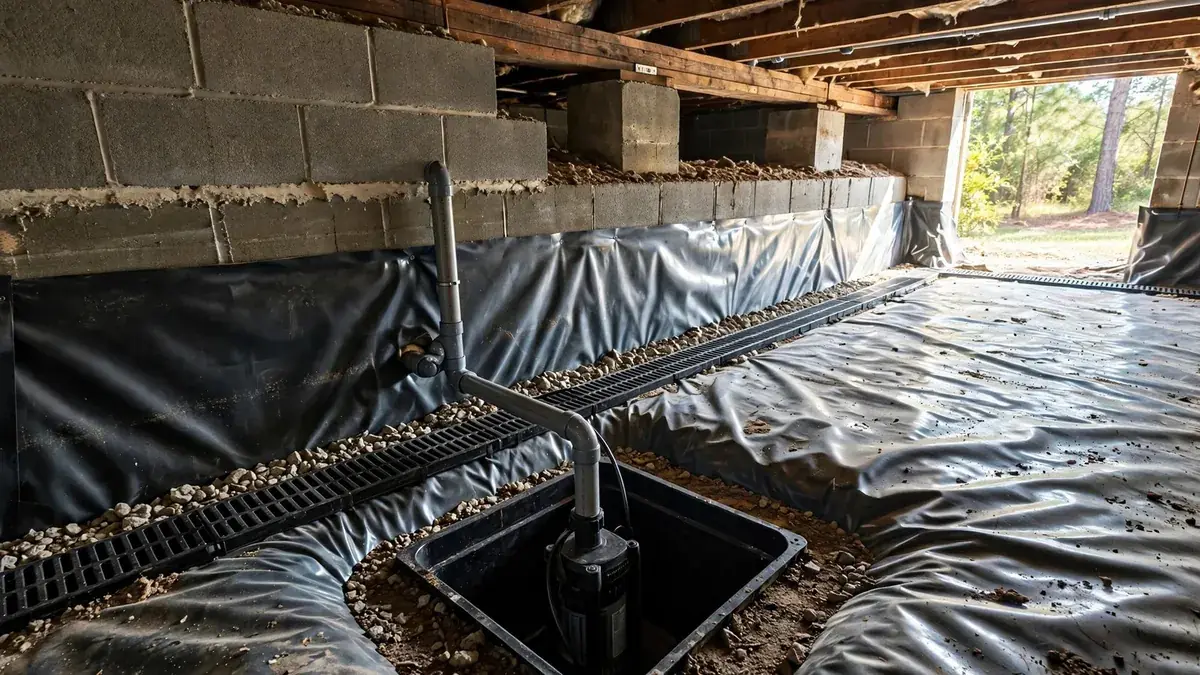
| Wet crawlspace | Runoff, high water table or a leaking pipe | Grading, vapor barrier, sump, pipe repair |
Kirkwood Lake, Cedar Lake and flood context
The Camden County hazard mitigation plan draft lists Cedar Lake and Kirkwood Lake as major water bodies in Voorhees and puts the Kirkwood Lake Dam in the 1 percent and 0.2 percent floodplains. The same document rates the township's flood hazard as High.
No public source we found counts basements in Voorhees, so no one can honestly say what share of houses have them. If yours sits near a lake, stream or low road, ask the township about flood maps before spending on drainage.
Source type: Camden County hazard mitigation plan (draft)What to do before we arrive
If water is coming in as you read this, these steps limit damage while you wait.
- ✓Stay out of standing water near outlets. Turn off power to the basement at the breaker only if you can reach the panel without wading.
- ✓Lift what you can. Move boxes, rugs and furniture onto blocks or higher shelves, starting with anything electrical or paper.
- ✓Check the sump pit. If a pump is installed, see whether it is running and whether the discharge line outside is open and clear.
- ✓Photograph the water line and the entry points. Dated photos help the assessment and any insurance conversation.
Three ways to keep a basement dry
Each addresses a different failure.
Outside: grade, gutters, downspouts
Move rain away from the foundation first.
- Lowest cost
- Does nothing for a high water table
- Call 811 before digging outdoors
Inside: perimeter drain and sump
Collect water at the footing and pump it out.
- Works for most seepage
- Needs a reliable pump, see sump pump
- Requires cutting the floor
Exterior excavation and membrane
Dig down, seal and drain the foundation wall.
- Most disruptive
- Highest cost
- Mainly for failing walls and persistent leaks
Interior drains handle water that reaches the basement. Outside work stops water before it arrives. Most houses need a mix.
How an assessment works
- 01
Walk the outside
We check gutters, downspouts, grading, window wells and any low spots.
- 02
Inspect the inside
A moisture meter and flashlight check walls, floor joints, pipes and the water heater.
- 03
Test the pipes
We look for leaks in supply lines, drains and fixtures. A hidden leak mimics seepage.
- 04
Review the sump
The pit, pump, float and discharge get a function test.
- 05
Explain the options
You get a clear price before work starts and a plain explanation of what each fix does.
Crawlspaces and under-house leaks
A crawlspace can flood from rain runoff or from a burst or leaking pipe, and the two look similar until you check for steady flow. A pipe split under the house often leaves a constant wet spot and a rising water bill, while runoff comes and goes with the weather.
Supply lines in unheated crawlspaces are also at risk in freezes. Heat tape, insulation and a working shutoff valve are cheaper than repairing a split pipe.
If you suspect a pipe, see leak detection for how we locate it.
What you can do this week for free
- ✓Clean gutters and extend downspouts several feet from the foundation.
- ✓Make sure soil slopes away from the walls rather than toward them.
- ✓Check window wells for debris and standing water.
- ✓Test the sump pump by pouring water into the pit.
- ✓Look for drips under sinks, around the water heater and at the main shutoff.
- ✓Note when water appears: during rain, after a shower, or at random.
When NOT to waterproof
If the water comes from a pipe, waterproofing will not help. A leak needs a plumber, and sealing over it can trap moisture and cause mold.
What drives the cost of waterproofing
Length of drain or wall treated
More linear feet mean more cutting and more material.
Type of floor and wall
Poured concrete, block and finished surfaces behave differently.
Pump and backup
A sump pit, pump, check valve and backup system add equipment.
Exterior access
Decks, sidewalks and landscaping complicate digging.
Finish and cleanup
Patching concrete and restoring finished areas add labor.
Insurance note. Homeowner insurance may exclude groundwater seepage, and flood coverage is usually separate, so check your policy. Ask for each step to be itemized so you can compare quotes fairly.
Water in the basement today?
Call (855) 575-2890. The 24/7 line is for active flooding, and we also serve West Berlin and the nearby boroughs.
Sources and references
The points above draw on these public standards, codes and guidelines. Rules change, so confirm current requirements with the agency or utility named before you rely on them.
- NJ Division of Consumer Affairs: State Board of Examiners of Master Plumbers FAQ (N.J.S.A. 45:14C-1)
- NJ One Call: call-before-you-dig safety guidance
- Camden County Hazard Mitigation Plan: municipal annexes (2021 public-review drafts)
Common questions
Waterproofing is the whole system. A sump pump is the part that removes collected water from a pit. Many jobs need both.
Paint can slow moisture through masonry but cannot stop pressure from groundwater. It often peels when real water arrives.
Seepage follows rain and shows along walls and floor edges. Leaks come from a pipe, appliance or drain and appear on dry days. A water meter test helps confirm a pipe leak.
The county plan rates township flood hazard High and lists lake and road flooding spots, but it does not count basements. Your own lot, grade and past water are the best guide.
Permit rules vary, so ask the Voorhees Construction Department before starting. Plumbing work must be done by licensed persons.
Shut off the main water, then call. A burst line needs repair, not drainage. Our team can locate the break and fix it.