
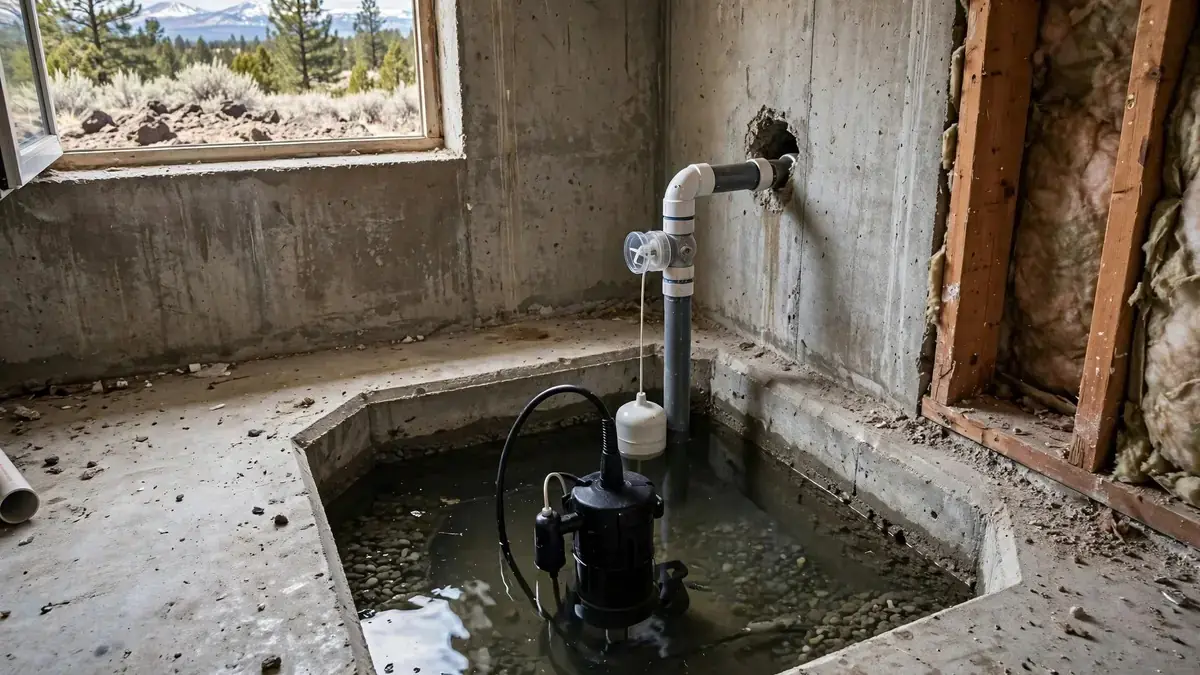
Why Voorhees basements take water
The Camden County hazard mitigation plan, in its draft Voorhees section, ranks flood hazard for the township as High and names Burnt Mill Road and Somerdale Road among the flooding problem areas. It also records Hurricane Irene in August 2011 as a declared disaster for the area.
For homeowners that means a sump pump is not an extra. It is the system keeping a finished basement dry through a heavy summer storm, and its failure is most likely at the worst possible time.
Source type: Camden County hazard mitigation plan (draft)Basement flooding because the pump stopped
A pit that stops moving water can fill a basement within hours during heavy rain. The goal is to slow the damage and stay safe until a technician arrives.
- 1Check power firstLook at the breaker and the GFCI outlet. A tripped outlet is a common cause. Do not touch anything while standing in water.
- 2Lift the floatIf the float is stuck against the pit wall, free it. The pump should start, and then you know it is a jam.
- 3Check the dischargeMake sure the outdoor outlet is clear and not frozen or buried.
- 4Bail or use a wet vacuumKeep the pit level low while you wait. Use a bucket, not an extension cord in wet areas.
- 5Call the 24/7 lineAsk for a same-day or after-hours visit.
If water has reached outlets or the panel, leave the room and call the electric utility or an electrician. Do not wade in.
Pump types and backups
The right system depends on how often your pit fills and what happens during outages.
Submersible primary pump
Sits inside the pit, quiet and common for homes.
- Handles most basements
- Needs a check valve
- Fails when the float sticks
Pedestal pump
Motor sits above the pit, easier to service.
- Shorter life in hot, damp rooms
- Louder
- Needs a narrow pit
Battery or water-powered backup
A second pump for outages and primary failure.
- Works during blackouts
- Batteries need replacement
- Water-powered types need adequate water pressure
Testing a pump before the storm
- 01
Pour in a bucket of water
The float should rise and the pump should start and empty the pit.
- 02
Listen and watch
Grinding, rattling or a motor that runs without moving water means trouble.
- 03
Check the check valve
Water should not slap back into the pit after the pump stops.
- 04
Look outside
Follow the discharge pipe and make sure it drains away from the foundation.
- 05
Test the backup
Unplug the primary briefly and confirm the backup starts.
Faults, causes and fixes
| Problem | Cause | Fix |
|---|---|---|
| Pump hums but no water | Jammed impeller or failed check valve | Clear or replace |
| Pump runs constantly | Stuck float, failed check valve or high groundwater | Reset float, replace valve, add a bigger pump |
| Pump never starts | Dead motor, tripped outlet or float failure | Test power, replace switch or pump |
| Short cycling | Pit too small or float set poorly | Adjust or replace pit and float |
| Water backs up at the outlet | Frozen or blocked discharge line | Clear and re-route |
| Foul smell from pit | Standing water or sewage entry | Inspect and clean |
Sump water must not be sent where it could harm the sewer system or a neighbor's property. The township holds the rules, so ask the Voorhees Construction Department before you choose a discharge path.
When NOT to install a new pump
If the water comes from a burst supply pipe, a failed water heater or a sewer backup, a sump pump will not solve it. Our leak detection team can locate the real source before you spend money.
What sets the price of a sump pump job
Pump type and horsepower
Higher capacity pumps cost more but handle heavier flows.
Pit condition
A cracked or undersized pit may need replacing.
Discharge routing
A longer run, new pipe or burying a line adds labor. Call 811 before digging outside.
Backup system
A battery or water-powered backup adds equipment and setup.
Time of call
Overnight and weekend dispatch is priced differently from scheduled work.
Insurance note. Homeowner insurance may exclude groundwater and seepage unless you added a sump or water backup endorsement, so check your policy. Get a clear price before work starts and ask what is included for the check valve and discharge pipe.
Before we arrive
Clear a path
Move stored items away from the pit.
Note the brand
Write down the pump make and model if visible.
Shut off power if wet
If water reached outlets, switch off at the breaker only if you can do so dry.
Photograph the water line
Photos help with insurance and show how high water rose.
Longer-term fixes for a basement that keeps flooding
If the pit fills every time it rains, a pump swap will not be enough. The drainage around the foundation, gutters and downspouts, and the grade of the yard decide how much water the pit has to handle.
That is a separate conversation about basement waterproofing. We also serve Somerdale and neighbouring boroughs where the same storms hit.
Sources and references
The points above draw on these public standards, codes and guidelines. Rules change, so confirm current requirements with the agency or utility named before you rely on them.
- NJ One Call: call-before-you-dig safety guidance
- Camden County Hazard Mitigation Plan: municipal annexes (2021 public-review drafts)
Common questions
Yes. The 24/7 line is open overnight and on weekends, and we book same-day visits when a technician is available. Check the breaker and float while you wait.
It varies with use, water quality and the model. A pump that runs often wears out sooner, so test yours each season and replace it before a storm tests it for you.
If your basement is finished, if power outages are common during storms, or if the pit fills often, yes. A backup keeps the pit emptying when the main pump or the power fails.
Do not assume so. Rules vary, and sump water in a sanitary line can cause problems. Ask the Voorhees Construction Department before connecting.
High groundwater, a leaking pipe or a stuck check valve sending water back into the pit are common. A technician can watch the cycle and find the source.
Yes. New Jersey law asks owners digging on their own property to call 811 at least three business days before. Hand dig within two feet of marked lines.