
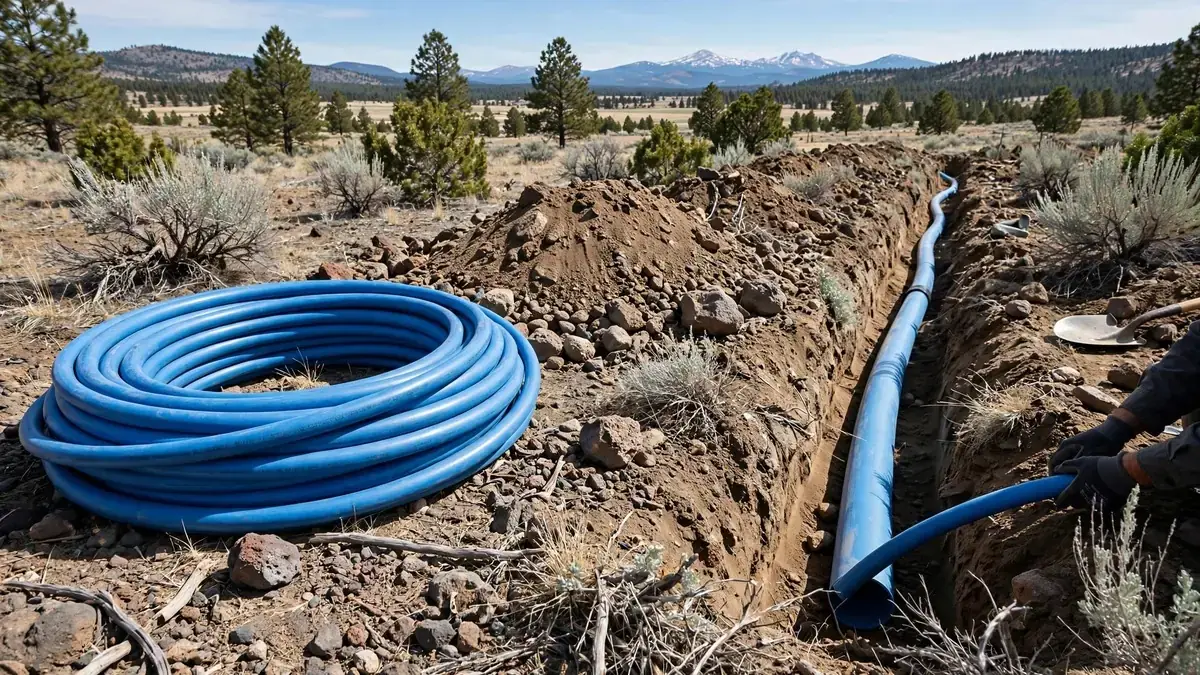
Signs the leak is outside the house
Water lines fail underground, so the first clues are indirect. Tick what applies.
- ✓A bill far above your normal use with nobody home more than usual
- ✓A wet or sunken patch in the lawn or driveway when the weather has been dry
- ✓Meter dial moving with every faucet and appliance off
- ✓Pressure that dropped on every floor at once
- ✓Hissing near the meter box or main valve
- ✓Mud or water pooling around the curb or meter pit
Two or more ticks is enough to call. Don't wait for the lawn to flood.
Run the meter test yourself
- 01
Turn everything off
Close taps, stop the washer and dishwasher, and check that the ice maker is not filling.
- 02
Read the meter
Note the numbers or the small leak-indicator triangle.
- 03
Wait twenty minutes
Use no water at all during this time.
- 04
Read again
Movement means a leak somewhere. If the main valve inside closes and the dial still turns, the leak is on the buried side.
A toilet that runs on its own can also move the dial, so check those first. The test points to the line, not the exact spot.
No water, or water surfacing in the yard right now
If water is geysering in the yard, flooding a basement wall or the house has lost supply, treat it as urgent and call the 24/7 line. Same-day visits are available when schedules allow.
Tell us where the meter is, what you see and when it started, because a surfacing leak is usually near the line but not always on top of it.
- 1Close the main shutoff inside the house
- 2Keep people and pets away from a soft or flooded area
- 3Photograph the wet spot and the meter reading
- 4Do not dig, because buried gas, electric and utility lines may be nearby, and 811 must be called first
How we find the exact break
Digging blind wastes money. We narrow the break with a pressure test of the line, acoustic listening at the meter and valves, and a pipe locator that traces the route underground.
Once the section is known, the dig is a small trench instead of a long one, which keeps your driveway, walk and landscaping intact as far as possible.
Spot repair, new trench or trenchless
Spot repair
Short section, sound pipe on either side.
- Smallest dig
- Fits a single break or a bad fitting
- Not for a line with several failures
Full replacement in a trench
Old, corroded or lead and galvanized pipe.
- Fresh line to the meter or house
- Clear route and the most reliable result
- More surface disturbance
Trenchless
Pull or burst a new line through the old path.
- Less lawn and pavement damage
- Needs entry points and a suitable path
- Not right for every line or soil
We tell you which fits your line after locating it, and we say so when a simple repair beats a replacement.
Who owns what between the street and your house
The line has more than one owner along its length. Ask before you assume.
Belongs to the water utility, New Jersey American Water in Voorhees.
The utility owns part of the line, and where its section ends is a question for the utility.
The rest of the line to the house. Ownership details vary, so confirm with the utility.
Everything after the main shutoff in the house is the owner's.
Lead, galvanized and the 2031 deadline in Voorhees
A 2021 New Jersey law requires water utilities to replace lead and galvanized service lines, including customer-owned ones, by 2031. New Jersey American Water says it will replace customer-owned lines found to be lead or galvanized, and customers can check their line material through the utility's lead facts page.
The utility also announced in 2022 that it would replace old cast iron mains, some dating to the 1950s, on ten Voorhees streets. If your line serves a house on one of those streets, ask whether work is planned before you pay for a replacement.
Source type: New Jersey American Water press release and NJ lead service line lawWhat changes the price of water line work
Length and depth
A longer, deeper line means more digging and pipe.
Surface above
Concrete, pavers and mature roots add restoration.
Pipe material
Copper, plastic and polyethylene differ, and lead or galvanized may fall under the utility.
Method
Open trench or trenchless methods have different setups.
Locating and permits
Marking utilities with 811 and any road or curb work add steps.
Insurance note. Some homeowner policies offer service line coverage as an endorsement, and a sudden break may be covered differently from wear, so check your policy. A clear price comes before work starts. Ask quotes to list restoration, since lawn and driveway repair often sits outside the plumbing scope.
Before the crew arrives
Call 811
NJ One Call asks for at least three business days notice before digging. Planned repairs wait for markings.
Locate shutoffs
Know where the main and the meter are and clear access to both.
Move vehicles
Free the driveway and the area over the line.
Note low pressure
Tell us which floors and fixtures lose pressure first.
Low pressure is not always the water line
Weak flow at one tap is usually a clogged aerator or valve. Low pressure everywhere with a normal meter could be a failing regulator or partially closed main. Pressure lost together with a spinning meter points to the line.
Related inside issues may belong to leak detection or repiping. Service line trouble in Lindenwold and Somerdale follows the same steps.
Sources and references
The points above draw on these public standards, codes and guidelines. Rules change, so confirm current requirements with the agency or utility named before you rely on them.
- New Jersey American Water: published water quality report (Delaware system) and Camden County service territory information
- NJ One Call: call-before-you-dig safety guidance
- New Jersey American Water: lead service line replacement information
Common questions
Yes. The 24/7 line takes calls for surfacing leaks and lost supply, and same-day visits are offered when available. Close the main shutoff inside while you wait.
Close the main valve inside and watch the meter. If the dial still moves, the leak is between the meter and the valve or beyond, which is underground.
Yes, before any digging. NJ One Call asks for notice at least three business days ahead and hand digging within two feet of marked lines.
New Jersey American Water has a lead facts page for checking line material, and a plumber can scratch-test a visible section. Ask the utility about replacement under the 2021 law.
Sometimes, if trenchless methods suit the path and soil. Locating the break first shows whether a small access hole will do.
The utility said in 2022 that it would replace old mains on ten Voorhees streets. Ask New Jersey American Water whether your street is on the list.