
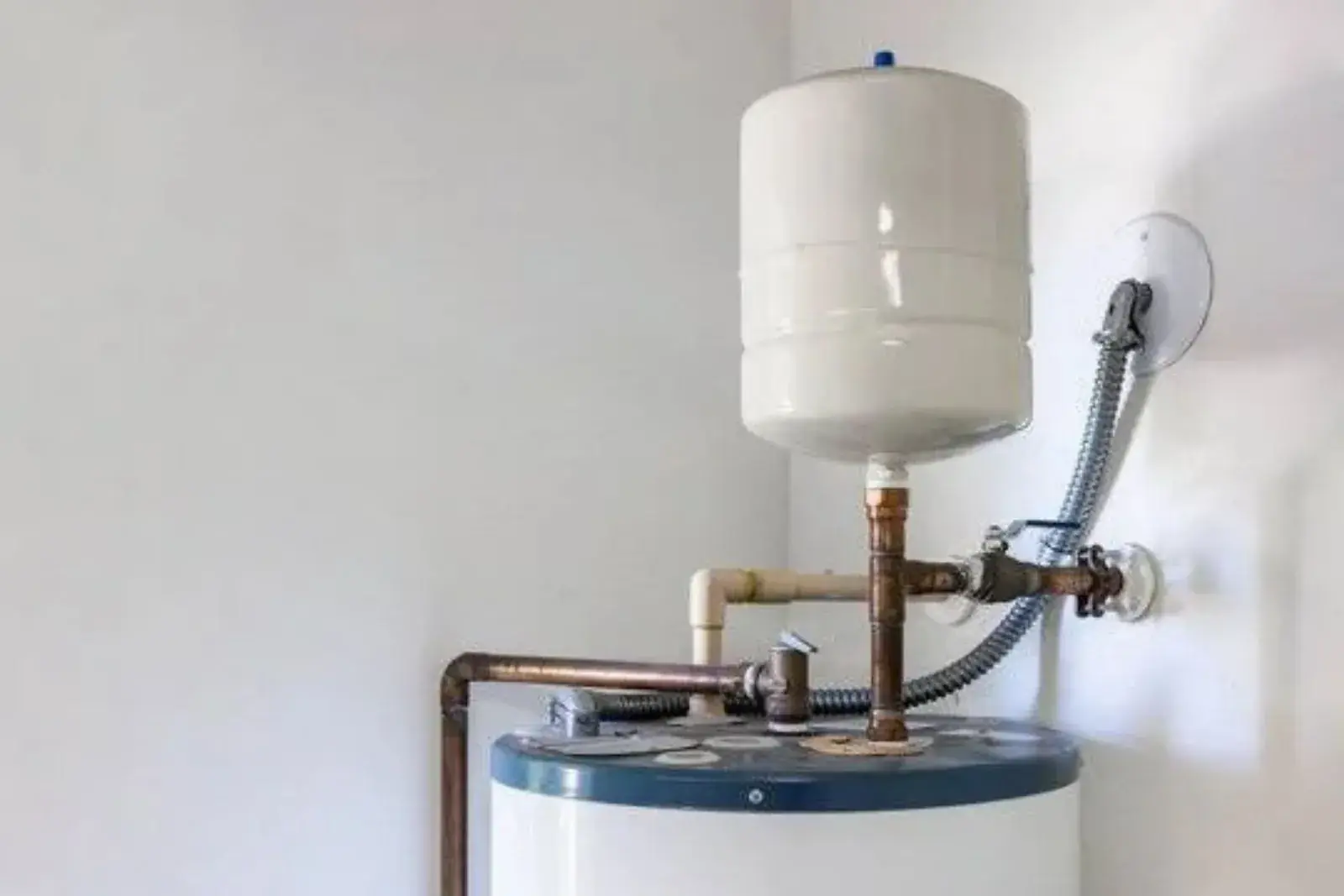
A thermal expansion tank is a small pressurized vessel, mounted on the cold supply line near a water heater, that absorbs the extra volume water takes up as it heats. Without it, a closed plumbing system has nowhere to send that volume, and pressure spikes every time the burner or element cycles.
This guide shows how the installation works, which steps are realistic for a careful homeowner, and which ones belong to a licensed plumber. It also covers the signs that your home may need a tank in the first place.
Why a closed system needs room for expanding water
Water expands as it warms. In an open system, that extra volume simply pushes back toward the street through the service line. Once a backflow preventer or a pressure reducing valve sits on your incoming line, the water can no longer escape that way.
The result is a pressure rise inside your pipes, fixtures and the tank itself. You may see the temperature and pressure relief valve drip after each heating cycle, hear a bang when a faucet closes, or watch a faucet washer wear out early. A correctly charged expansion tank gives that volume a place to go.
Signs your water heater may need an expansion tank
None of these signs proves the cause on its own. A plumber confirms with a pressure gauge on a hose bib.
| What you notice | Why it points to thermal expansion | First move |
|---|---|---|
| Relief valve drips after a heating cycle | Pressure climbs past the valve setting and the valve opens briefly | Gauge the static pressure before touching the valve |
| Banging or knocking when a tap shuts | High pressure makes water hammer worse | Check pressure first, then look at the line for loose straps |
| Short-lived faucet cartridges and supply hoses | Constant pressure swings fatigue soft parts | Test pressure at night when the street demand is low |
| Existing tank that is waterlogged | A failed bladder leaves no air cushion | Tap the tank: it should sound hollow on top and solid below |
A rule worth keeping
Never plug or cap a dripping relief valve to stop the drip. That valve is the last safety device on the heater, and a dripping one is a symptom, not the disease.
The installation sequence, start to finish
The order below is the one most plumbers follow. Read your tank's printed instructions too, because models differ.
- 01
Shut off the fuel and water
Switch the breaker off for an electric heater, or turn a gas heater's control to pilot or off. Close the cold water shutoff above the heater. If the shutoff does not close fully, stop here and call a plumber.
- 02
Relieve pressure and drain a little
Open a hot tap upstairs, then open the heater's drain valve with a hose to a floor drain until the cold line above the heater is empty. Water in the line will spill out of the cut otherwise.
- 03
Set the tank's air charge
Use a tire gauge on the tank's air valve. The charge should match the static water pressure you measured at a hose bib. Add air with a hand pump if it is low.
- 04
Install a tee and mount the tank
Fit a tee on the cold supply line within a short run of the heater. Support the tank with a bracket if it is heavy, because the fitting alone should not carry the weight. Use pipe thread sealant on threaded joints.
- 05
Refill, purge air and check for leaks
Open the cold shutoff slowly with a hot tap running so air escapes. Wait for steady flow, then restore fuel or power. Run a hand along every joint and watch for seepage over the first heating cycle.
Soldering or press fittings on the cold line add a second layer of skill. Sweat joints near a gas heater, wood framing or insulation can start a fire if you are not careful.
Do it yourself or hire a plumber
Both paths are legitimate. The right one depends on your pipe type, your comfort with fittings and the gas or electric supply.
Reasonable to try yourself
Threaded connections on an accessible cold line with a working shutoff.
- Copper, CPVC or PEX with a screw-on adapter
- Electric heater with the breaker off
- Gauge, air pump and thread sealant on hand
- No sign of corrosion at the existing fittings
Better to call a plumber
Anything that touches gas, soldering or a stuck valve.
- Gas heater with a draft hood or flue near the work
- Corroded unions or a shutoff valve that will not close
- Sweat joints in a tight space
- Pressure above normal on your gauge, which may need a pressure reducing valve
A plumber installing a heater through water heater installation usually adds the tank in the same visit, and a repair call through water heater repair can diagnose a dripping relief valve before you buy parts.
What Voorhees homeowners should know about permits
According to the New Jersey Department of Community Affairs Construction Code Communicator, replacing an existing water heater with one of like capacity is minor work. Minor work may begin once the enforcing agency has been notified, and plumbing work must be done by persons licensed to perform it.
Adding an expansion tank is usually part of that replacement visit. If you are adding one alone, permit rules vary, so ask the Voorhees Construction Department before you start.
Source type: NJ DCA Construction Code CommunicatorMistakes that cause callbacks
These are the errors plumbers meet most often when they fix a homeowner's first attempt.
- ✓Setting the air charge after the tank is already full of water, which gives a false reading
- ✓Mounting the tank hanging downward without a support strap
- ✓Skipping the pressure gauge and guessing the charge
- ✓Leaving air trapped in the line so the first shower spits and knocks
- ✓Installing on the hot side instead of the cold side
- ✓Forgetting that a tank with a failed bladder will look fine from outside
When to call the 24/7 line instead
Stop and make the call if you smell gas, see rust-colored water from the heater, or find a puddle under the tank. For gas, leave the building and call the gas utility or 911 first.
If a heater is leaking at the tank body itself, an expansion tank will not fix it, and the heater may need replacing. Our team covers Gibbsboro and Somerdale as well as Voorhees, and you can reach us on (855) 575-2890 for urgent leaks.
Sources and references
The points above draw on these public standards, codes and guidelines. Rules change, so confirm current requirements with the agency or utility named before you rely on them.
- New Jersey Department of Community Affairs: Construction Code Communicator, Winter 2018
- New Jersey American Water: lead service line replacement information