A toilet that will not flush has one of three problems: the tank is not releasing water, the bowl or trap is clogged, or the drain line beyond the toilet is blocked. Each one looks a little different and needs a different fix. Telling them apart saves you from plunging a toilet that only needs a new flapper.
The steps below start with the quick checks, move to the plunger and auger, and end with the signs that mean the problem is bigger than one fixture.
Which problem do you have?
| What happens | Probably | Start here |
|---|---|---|
| Handle feels loose, nothing happens | Broken chain or handle arm in the tank | Lift the tank lid and look |
| Weak flush, tank empties normally | Clog in the bowl or trap | Plunge |
| Tank does not empty at all | Flapper or lift chain issue | Check flapper and chain |
| Bowl rises, then drains very slowly | Partial clog in trap or drain | Plunge, then auger |
| Bowl fills and stays full | Blockage past the trap | Stop flushing, plunge once |
| Gurgling, other drains slow too | Main line blockage | Do not keep flushing, call |
If the bowl is about to overflow
Do not flush again. Each flush sends another tank of water into a bowl that cannot drain.
Lift the tank lid, push the flapper down to hold it closed, and shut off the supply valve behind the toilet by turning it clockwise. This stops new water.
- 1Stop flushing and remove the tank lid.
- 2Close the flapper by hand if the tank is still draining.
- 3Turn the supply valve behind the toilet clockwise until it stops.
- 4Put towels around the base and move rugs away.
- 5If the supply valve will not turn, shut off the main water valve for the house.
If dirty water is coming up from a tub or floor drain, stop using water in the house and call the 24/7 line.
Clear a clogged bowl without damaging it
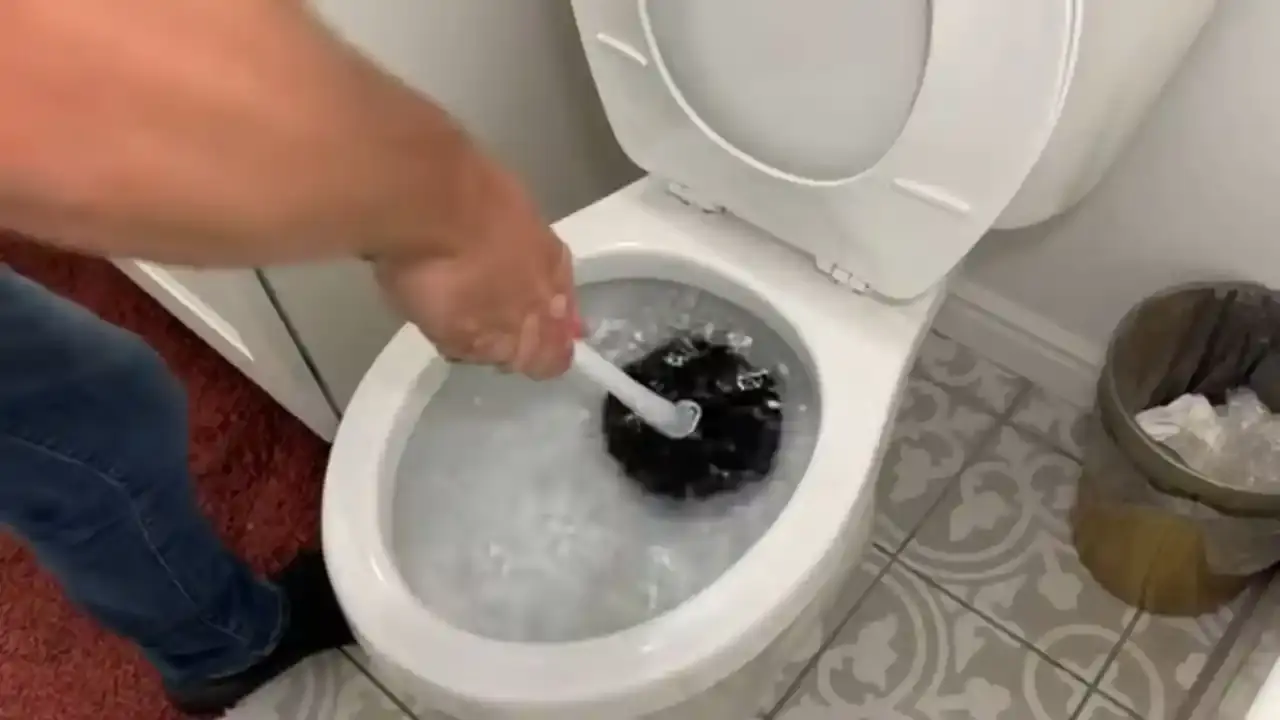
Use a flange plunger, not a flat sink plunger. It seals against the toilet outlet and pushes force down the drain.
- 01
Add water if needed
The bowl needs enough water to cover the plunger cup. If it is low, add a little from a bucket. Do not overfill.
- 02
Seal and push gently
Seat the cup over the hole and push down slowly to purge air, then pump with firm, steady strokes for about twenty seconds.
- 03
Break the seal and check
Pull up sharply. If the water drops and gurgles away, test with a half flush before a full one.
- 04
Try a closet auger
If plunging fails, feed a closet auger (a toilet snake with a rubber sleeve) into the bowl, crank to catch the clog, and pull it back out.
- 05
Stop after two rounds
If neither tool clears it, the blockage may be a solid object or past the trap. More force risks cracking the bowl.
Plunger, auger or plumber
Plunger
A flange plunger for paper and waste clogs.
- First tool to try
- Low risk when used gently
- Fails on solid objects
Closet auger
A short cable made to pass through the toilet trap.
- Reaches the trap and just beyond
- Rubber sleeve protects the porcelain
- Needs a steady, patient hand
Plumber
Larger cables, camera checks or removing the toilet.
- Handles main line clogs
- Can pull the toilet to retrieve objects
- Checks the flange and wax ring
Who owns which pipe in Voorhees, NJ
In Voorhees, sewer billing questions go to the township Tax Collector, and the township code has a chapter on sewers that includes a section on maintenance and replacement responsibility. If a toilet keeps backing up and the blockage is outside the house, you will want to know who owns which part of the line.
Ask the township before assuming. A camera inspection can show where the blockage sits, and the township can tell you what part of the pipe is the homeowner's responsibility.
Source type: Voorhees Township code on sewers and Tax Collector sewer billing guidanceHow serious is it?
One toilet, one clog
Other fixtures drain fine, and a plunger or closet auger is within reach.
Repeat clogs on one toilet
A loose base, rocking bowl, or leaking wax ring point to a flange problem or a partial blockage.
Backups in the tub, floor drain or multiple fixtures
That is a main line problem. Stop using water in the house.
Quick checks before you plunge
- ✓Is the water supply valve open and the tank filling?
- ✓Is the flapper sealing, and is the chain slack but not tangled?
- ✓Does the tank empty when you press the handle?
- ✓Do other drains in the house work normally?
- ✓Did a child's toy, a wipe or paper towels go in recently?
- ✓Is there any sewage smell, gurgling or water in the tub?
If several drains are affected, skip the toilet and look at drain cleaning for the shared line.
Why it keeps clogging
Repeat clogs have causes. Low-flow toilets need good flushing power, and a partially blocked vent or a tree-root intrusion in the sewer line can weaken it. Wipes, paper towels and thick paper are common culprits.
A toilet that rocks, leaks at the base or clogs repeatedly may have a flange problem. Our toilet repair visits check the flange, wax ring and fill valve together. If the line outside is the issue, sewer line cleaning clears the whole run, and neighbors in Gibbsboro and Somerdale rely on the same fix.
Never use chemical drain cleaner in a toilet. It sits in the bowl, can damage the fixture, and makes later plunging dangerous because of splashback.