
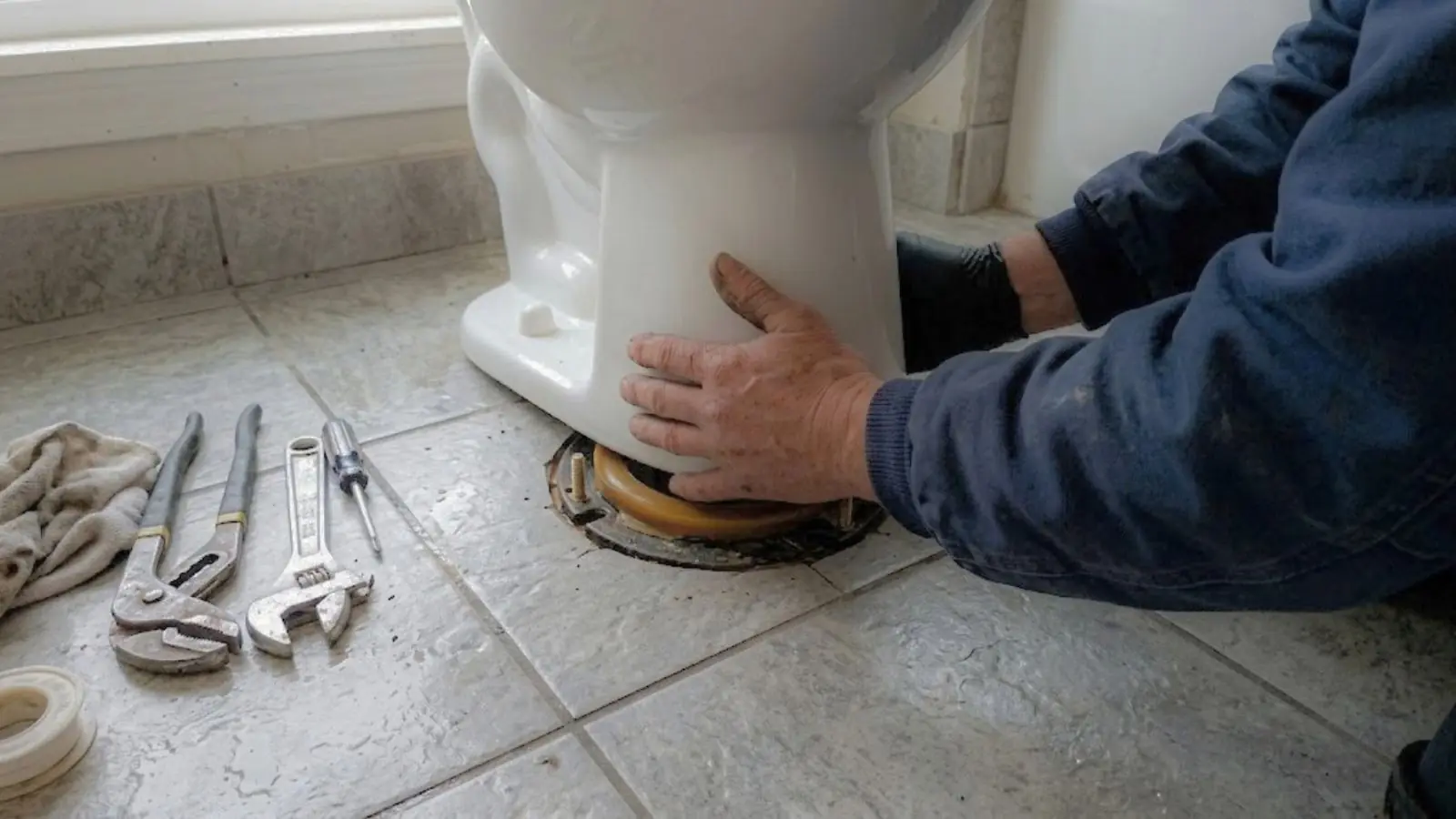
A toilet flange is the ring, usually PVC, cast iron or brass, that bolts to the floor and connects the base of the toilet to the drain pipe. The wax ring seals the gap between toilet and flange, and the closet bolts hold the toilet down.
When the flange cracks, rusts or sits at the wrong height, the seal fails. That shows up as a toilet that rocks, a damp floor around the base or a faint sewer smell. This guide helps you work out which one you have, and where a do-it-yourself fix stops making sense.
How serious is your toilet base problem?
Match what you see to the level below before you decide how to spend the weekend.
Slight wobble, dry floor
Loose closet bolts or a shim missing. Tighten evenly and add plastic shims if needed.
Damp floor after flushing
The wax ring is probably failing. Pull the toilet, inspect the flange and replace the seal.
Soft floor, stains below, sewer smell
Water has been escaping for some time. Stop using the toilet and have the subfloor checked.
What a failing flange looks like up close
Pull the toilet and look at the ring itself. Cast iron flanges rust and flake. Plastic ones crack at the bolt slots, often where someone over-tightened a nut. Some flanges sit below the finished floor after a tile job, which leaves a gap the wax cannot bridge.
A good flange sits flat on the subfloor, is firmly screwed down, and rises to meet the underside of the toilet at or just above finished floor height. Anything loose, bent or recessed is a repair candidate.
Symptoms, likely causes and what to do
| Symptom | Likely cause | Next step |
|---|---|---|
| Toilet rocks side to side | Loose bolts, uneven floor or a cracked flange | Check the bolts, then lift the toilet and inspect the ring |
| Water pooling at the base | Failed wax ring or hairline crack in the flange | Replace the seal and inspect the flange |
| Sewer gas smell near the toilet | Open gap between the flange and the pipe | Pull the toilet, check the seal and the pipe stub |
| Toilet sinks into the floor | Rotted subfloor under a long-term leak | Stop using it and call a plumber before flushing again |
| Bolts spin and never tighten | Stripped or broken flange ears | Fit a repair ring or replace the flange |
Replacing the wax ring and checking the flange
This is the basic swap most homeowners can handle if the flange itself is sound.
- 01
Shut off, flush and empty
Close the supply valve, flush, then sponge the last water from the tank and bowl. Disconnect the supply line.
- 02
Lift the toilet straight up
Remove the closet bolt nuts and lift with your legs, ideally with a helper. Set it on a towel. Stuff a rag in the drain opening to block sewer gas.
- 03
Scrape the old wax and inspect
Remove all old wax from the flange with a putty knife. Look for cracks, rust and a loose fit on the subfloor. Check the height against the finished floor.
- 04
Set the new seal and lower the toilet
Place a new wax ring or wax-free gasket on the flange, then lower the bowl straight down onto the bolts. Do not twist once it touches.
- 05
Tighten gradually and test
Alternate between the two nuts a little at a time. Reconnect the supply, flush several times and run a dry paper towel around the base.
If the flange is cracked or the subfloor is soft, stop and call. Fastening a new flange to rotted wood does not hold, and the repair may involve cutting into the floor and drain.
Repair ring, flange extender or full replacement
Which fix suits depends on what the flange is made of and how it is failing.
Repair ring or flange extender
For a sound pipe with a damaged or low flange.
- Good when the pipe below is intact
- Works on tile that raised the finished floor
- Quick, but depends on solid screws into the subfloor
Cutting out and replacing the flange
For cast iron that has rusted away or a flange glued to a broken stub.
- Needs the right primer and cement for plastic pipe
- May involve opening the floor below
- Best done by a plumber with the right tools
Why flange age matters in Voorhees homes
According to the Census American Community Survey, the median year built for housing in Voorhees is 1983, and about 35 percent of the housing was built in the 1980s. That means many toilets in town sit on flanges that have been in service for decades.
Flanges of that age were often fastened with steel screws that can rust, and the original wax ring may have been disturbed by later tile or flooring changes. If your bathroom floor was updated, check flange height before you reset the toilet.
Source type: Census American Community SurveyWhen not to do this yourself
Skip the DIY swap if the toilet has been leaking for months, the floor flexes underfoot, or the bathroom sits above a finished ceiling. Hidden water damage and mold are cheaper to deal with early. A pro can pull the toilet and judge the damage in one visit.
What a plumber checks that homeowners often skip
A plumber looks at the closet bend below the flange, the vent, and whether the drain runs freely. A toilet that gurgles or backs up after a reset may have a drain problem that no new wax ring will fix. In that case, drain cleaning or a camera look makes more sense than another seal.
We also test the toilet after setting it: multiple flushes, a dye or paper check, and a look under the floor if access allows. If you want the whole job handled, see our toilet repair and plumbing installation pages.
Service beyond Voorhees
We work in Lindenwold and West Berlin too, where many bathrooms have the same mix of older and renovated floors. If water is coming out from under a toilet right now, shut the supply valve and call (855) 575-2890.
Sources and references
The points above draw on these public standards, codes and guidelines. Rules change, so confirm current requirements with the agency or utility named before you rely on them.
- New Jersey Department of Community Affairs: Construction Code Communicator, Winter 2018
- U.S. Census Bureau: QuickFacts and American Community Survey 2020 to 2024 estimates