
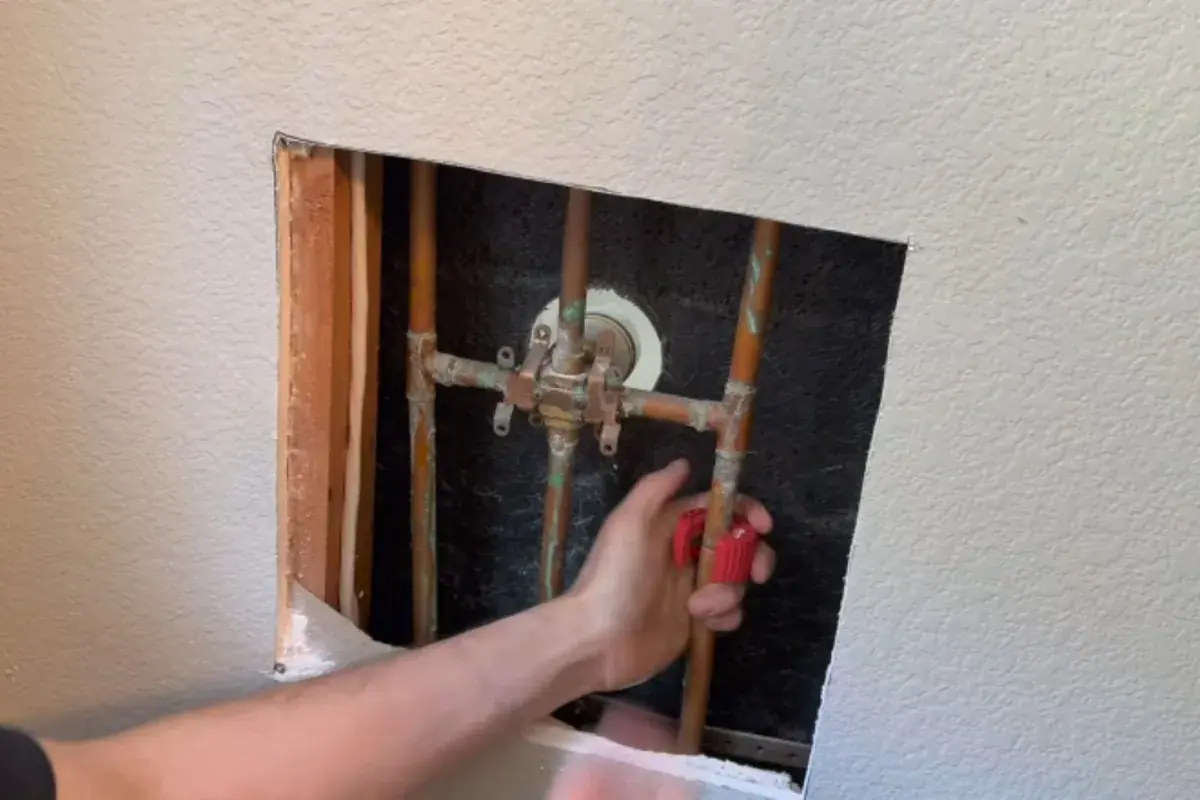
A dripping shower faucet means a seal inside the valve behind the wall no longer stops water when the handle is off. The part at fault is usually a rubber washer, an O-ring, a plastic or brass cartridge, or a worn valve seat.
The drip wastes water and, if the valve is hard to reach, can hint at a bigger problem. This guide walks through the causes by faucet type, the order to test them and the point where you should stop and call.
Where the drip comes from tells you what failed
Look at where the water appears. A drip from the showerhead after you turn the water off points at the valve itself. A drip from the tub spout while the shower is running means the diverter is worn. A drip around the handle or behind the trim plate suggests a bad packing or O-ring.
Hot-side and cold-side drips matter too. If the showerhead drips warm water, the hot side is leaking. A single-handle valve with a cartridge mixes both, so a worn cartridge can leak either way.
Match your faucet to the usual failure
Most homes have one of four setups. Identify yours before you buy a part.
| Faucet type | Usual cause of a drip | Typical fix |
|---|---|---|
| Two-handle compression | Worn rubber washer or damaged seat | Replace washer, smooth or replace the seat |
| Single-handle cartridge | Worn cartridge or O-rings | Replace the cartridge with the exact model |
| Ball-type | Worn seals and springs | Replace the rebuild kit |
| Ceramic disc | Cracked disc or worn seals | Replace the cartridge assembly |
How urgent is the drip?
Slow drip after a shower
Annoying but not harmful. Plan a repair this week or month.
Steady drip or hot water dripping
Wastes water and may scald a bather. Book a repair soon.
Water behind the wall, stained ceiling below
A leak inside the wall needs quick action. Shut off the water and call.
A careful repair of a single-handle cartridge
This sequence applies to the most common type. If your valve looks different, stop and check the maker's instructions.
- 01
Turn off the water
Use the fixture shutoff if there is one, or the main shutoff. Open the shower to drain the line and confirm the flow has stopped.
- 02
Remove the handle and trim
Unscrew the handle, then the trim plate, noting the order of parts. Take photos as you go.
- 03
Pull the cartridge
Remove the retaining clip or nut, and pull the cartridge straight out with a cartridge puller if it sticks. Do not pry at the valve body.
- 04
Match and replace
Bring the old cartridge to the supplier and buy an exact match. Grease the O-rings with plumber's silicone.
- 05
Reassemble and test
Reassemble in reverse order, open the supply slowly, and test hot and cold. Watch the trim plate for seepage.
If the cartridge will not come out, the valve body is corroded, or the shutoff will not close, stop. Forcing it can crack the valve or the pipe inside the wall.
When a new cartridge will not fix it
If the drip returns after a new cartridge, the valve seat or body may be worn or pitted. At that point the whole valve is replaced, which means opening the wall from the back or through the tile. That is a plumber's job.
Fixtures and permits in Voorhees
The New Jersey Department of Community Affairs treats fixtures replaced with no change to the piping as ordinary maintenance. A new trim kit or cartridge falls in that group. Anything that alters the supply piping behind the wall must be done by licensed persons.
That distinction helps you decide: swapping a cartridge or trim is the kind of repair a careful homeowner can attempt, while replacing a valve body in a wall belongs to a licensed plumber.
Source type: NJ DCA Construction Code CommunicatorRepair the valve or replace it
Repair the existing valve
Cheaper in time and mess, with limits.
- Works when the valve body is sound
- Parts are still made for your brand
- No wall access needed
Replace the valve
A bigger job that fixes repeated problems.
- Right when the body is pitted or discontinued
- Gives a chance to add an access panel
- Often paired with new trim or a new shower
Our team handles both through faucet repair, and if the leak is inside the wall, leak detection can find the source before anyone cuts tile.
Hard water and the life of shower parts
New Jersey American Water reports Voorhees water hardness of 88 mg/L in its water quality report. Mineral scale builds on cartridges, stops them from seating and wears the seals, so hard water often shortens their life.
Cleaning the showerhead and replacing cartridges at the first sign of stiffness can slow the cycle. Some homeowners also add a softener, which is a bigger project than a single repair.
Neighbors we also serve
Homes in Lindenwold and West Berlin have the same range of shower valves, from old two-handle sets to modern pressure-balance models. If water is dripping inside a wall right now, shut it off and call (855) 575-2890.
Sources and references
The points above draw on these public standards, codes and guidelines. Rules change, so confirm current requirements with the agency or utility named before you rely on them.
- New Jersey American Water: published water quality report (Delaware system) and Camden County service territory information
- New Jersey Department of Community Affairs: Construction Code Communicator, Winter 2018
- NJ Division of Consumer Affairs: State Board of Examiners of Master Plumbers FAQ (N.J.S.A. 45:14C-1)